
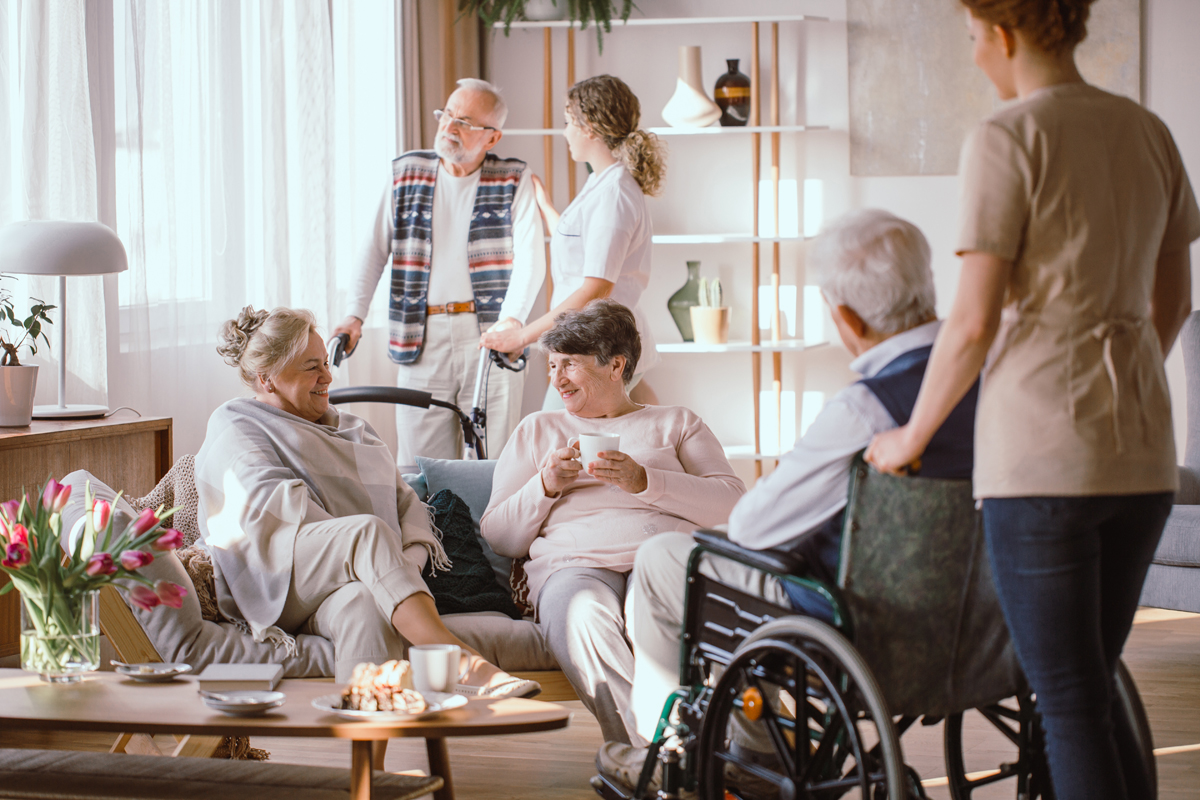
Independence is one of the most frequently used and least clearly understood ideas in conversations about senior living. For many families, it carries a strong meaning tied to living at home, managing daily responsibilities alone, and making personal decisions without outside involvement. Because of that, the idea of moving into a community setting can sometimes feel like a loss of independence before the details are fully understood.
In reality, independence in senior living is not always defined in the same way it is at home. It is often less about doing everything without help and more about maintaining control over daily life while receiving support where it is needed. Understanding this difference can make it easier to interpret what independence actually looks like in a community environment.
Why independence becomes a central concern
Families often begin their search at a point when something about daily life has started to change. Tasks that were once simple may now take more time or require assistance. There may be growing concerns about safety, consistency, or isolation. At the same time, there is a natural desire to preserve as much autonomy as possible.
This creates a tension. Support is needed, but independence is still highly valued. As a result, families may approach senior living with the assumption that more support automatically means less independence. This assumption can shape how they interpret everything from care services to daily routines.
How independence is commonly misunderstood
One common misunderstanding is that independence means doing everything alone. In everyday life, even outside of senior living, most people rely on some form of support. This can include services, routines, or assistance from others. In a community setting, that support is more visible, which can make it seem like independence has been reduced, even when personal control remains intact.
Another misconception is that accepting help leads to a loss of choice. In practice, many forms of assistance are designed to support decision making rather than replace it. For example, having meals prepared does not necessarily mean a person loses control over what or when they eat. It often means that the effort of cooking has been removed, while the choice of participating in meals remains.
There is also an assumption that structured environments limit personal freedom. While senior living communities do have routines, such as set meal times or scheduled activities, these structures are typically intended to create consistency, not to dictate how each resident spends their day.
What independence often looks like in daily life
In a senior living setting, independence often shows up in the ability to make everyday decisions without needing to manage every underlying task. A resident may choose when to wake up, whether to attend an activity, how to spend the afternoon, and who to interact with. At the same time, support may be available for tasks that have become more difficult, such as bathing, medication management, or housekeeping.
This combination can allow a person to focus more on how they want to spend their time, rather than on the effort required to maintain all aspects of a household. For some, this feels like an expansion of independence rather than a reduction. To others, it may take time to adjust to the idea that independence can include receiving help.
For example, a resident might no longer drive to the store or cook every meal, but they may gain more consistent access to social interaction, structured activities, and a predictable daily rhythm. The form of independence changes, even if the sense of personal choice remains.
The role of support in maintaining autonomy
Support in senior living is often designed to fill specific gaps rather than take over completely. In assisted living, this might include help with certain parts of a daily routine while leaving other parts unchanged. The goal is generally to provide enough assistance to make daily life manageable without removing the ability to make personal decisions.
This can be especially important when small challenges begin to affect larger parts of the day. Difficulty managing medications, for example, can have broader consequences if not addressed. In that context, receiving help with one task can support a greater level of independence overall.
Families sometimes view support as a sign that independence is ending. In many cases, it is part of how independence is maintained in a different form. By reducing the strain of certain tasks, support can make it easier for a person to continue participating in daily life on their own terms.
How this idea fits into decision thinking
During a senior living search, it can be helpful to look beyond the surface definition of independence and consider how it functions in real life. Instead of asking whether a setting is independent or not, families may find it more useful to ask how decisions are made, what choices are available, and how support is delivered.
This perspective can also clarify the differences between types of senior living. Independent living typically involves minimal support, focusing on convenience and lifestyle. Assisted living includes more hands on help with daily tasks. Skilled nursing provides a higher level of medical care. Each option reflects a different balance between independence and support, rather than a simple presence or absence of autonomy.
Understanding this balance can make it easier to interpret what a particular community offers. It shifts the focus from a single concept to the broader experience of daily life.
Seeing independence as something that evolves
Independence is not a fixed condition. It often changes over time, shaped by health, environment, and the availability of support. In senior living, it is usually expressed through the ability to make choices within a supportive structure, rather than through complete self management of every task.
For families, recognizing this can bring more clarity to the search process. It allows them to see independence not as something that is lost or preserved in absolute terms, but as something that can be maintained in different ways. Experiences vary from person to person, but understanding how independence is defined within senior living can make the overall picture feel more understandable and less constrained by assumptions.
Contact us with any questions or to schedule a tour!